My son A walked up to my desk with three sheets of paper - a rules page, a level map on grid paper, and a sticky note titled “sea erchen cutching” - and asked me to make it a real game. Not could I. When.
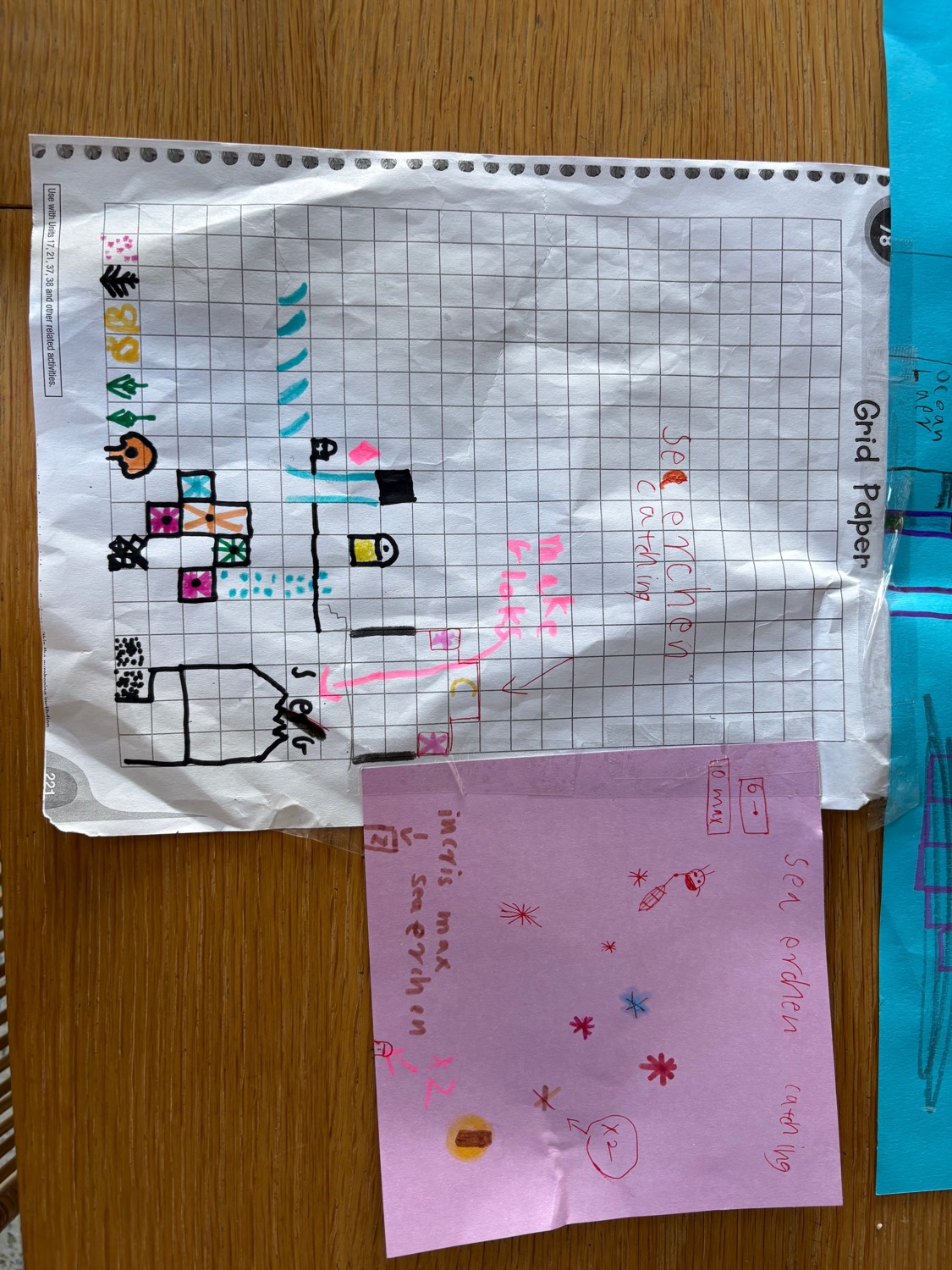
So we did. The setup is four jobs and I only do one of them. A is Design, and lately Product. I’m the translator - I turn “green stairs will appear when the elevator gets to the top” and “5 seconds up and then go down” into something a coding agent can actually act on. Claude Code writes the game: one HTML file, canvas, no build step, because I am not explaining a JavaScript toolchain to a small child and neither are you. And then A is QA, a role he takes extremely seriously.
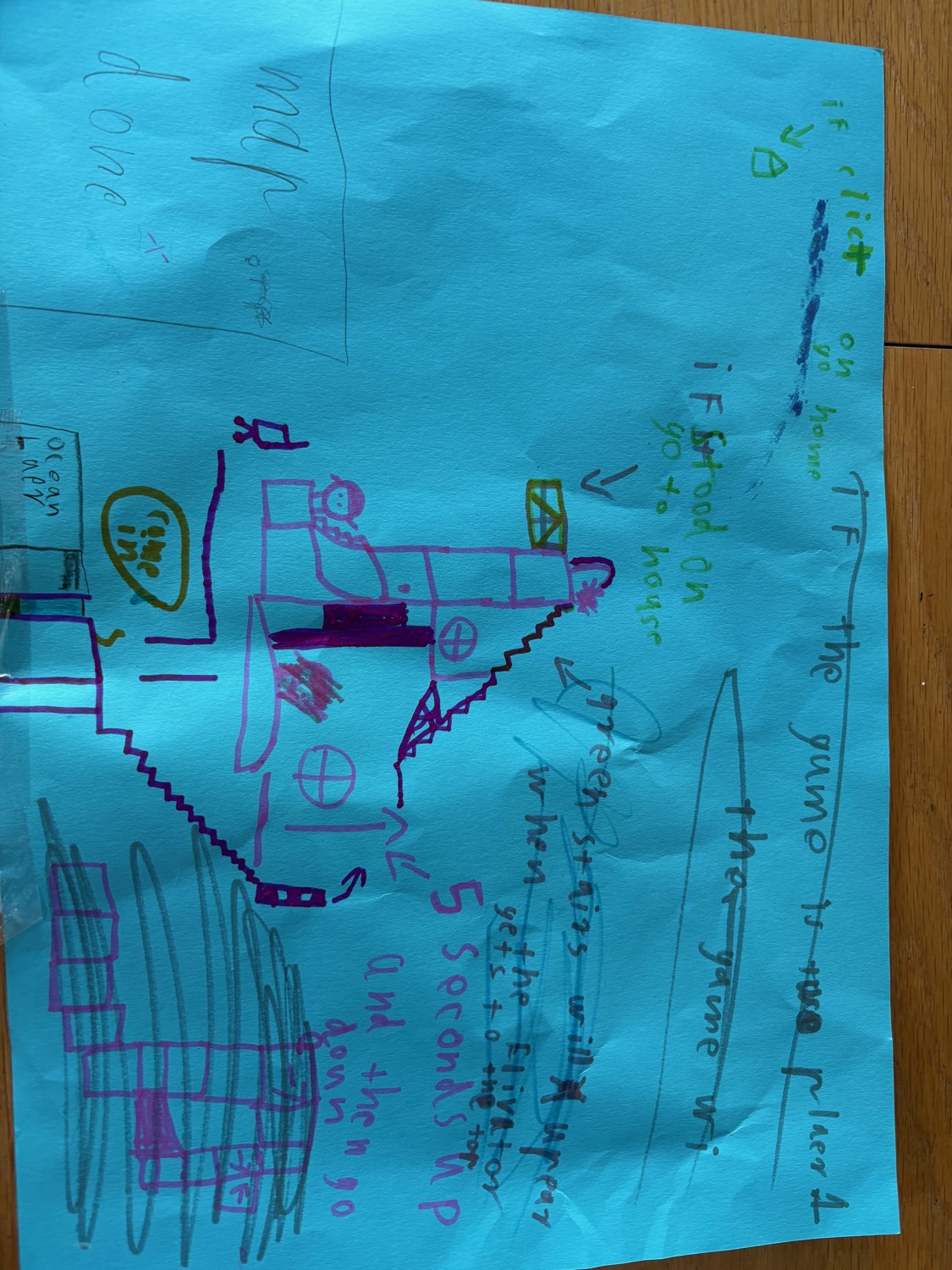
The feedback loop is the whole point. Actual items from the review queue:
- “Cokco doesn’t look how he imagined. Here’s a picture.”
- “One arm should be up and one down.”
- “The arms should be at opposite angles to each other, not at different angles to horizontal.”
That last one is a better bug report than most I get from adults. You paste it in. It gets fixed. He checks it against the drawing. That is the entire job, on a loop, until he wanders off to lunch.
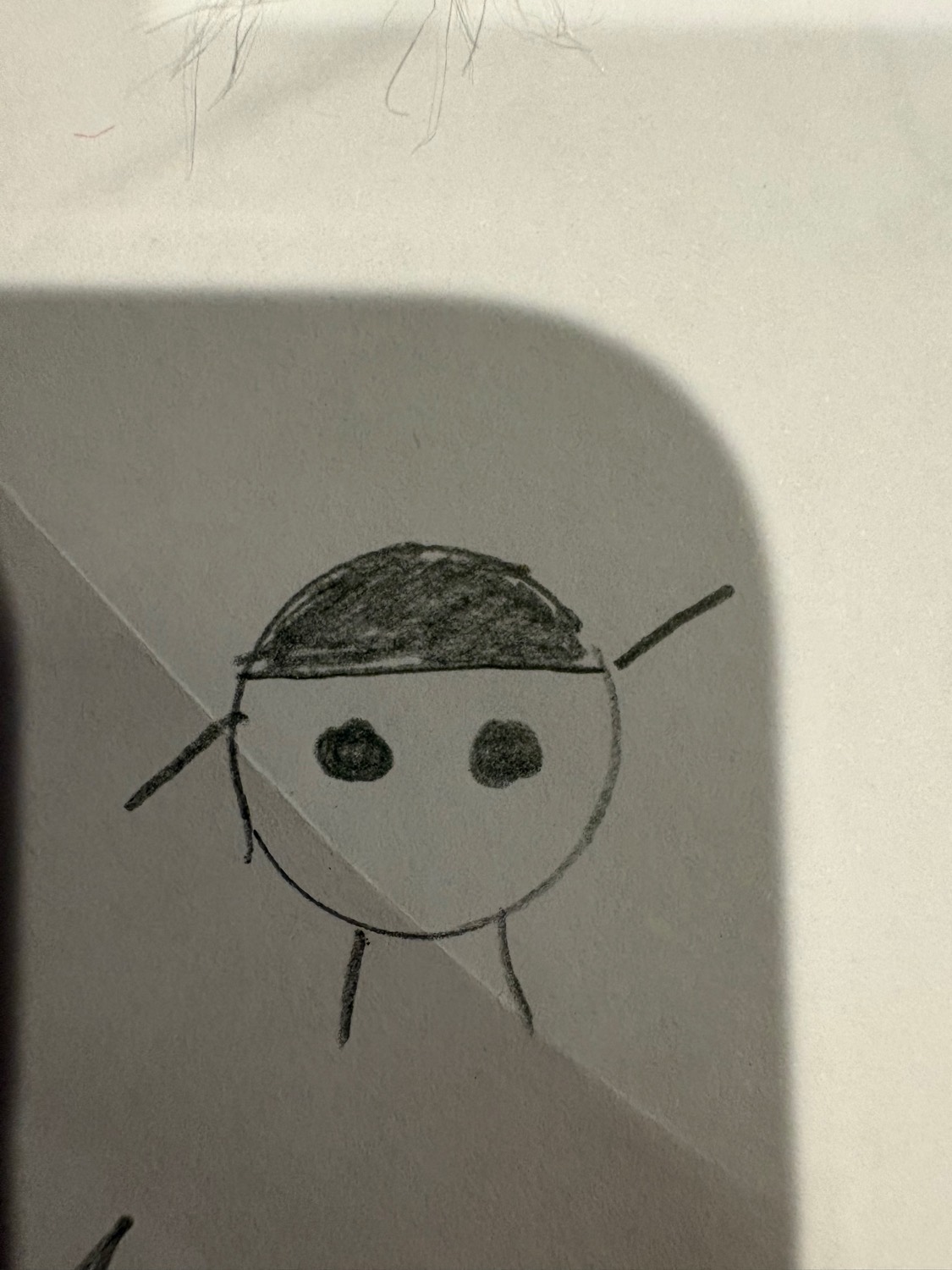
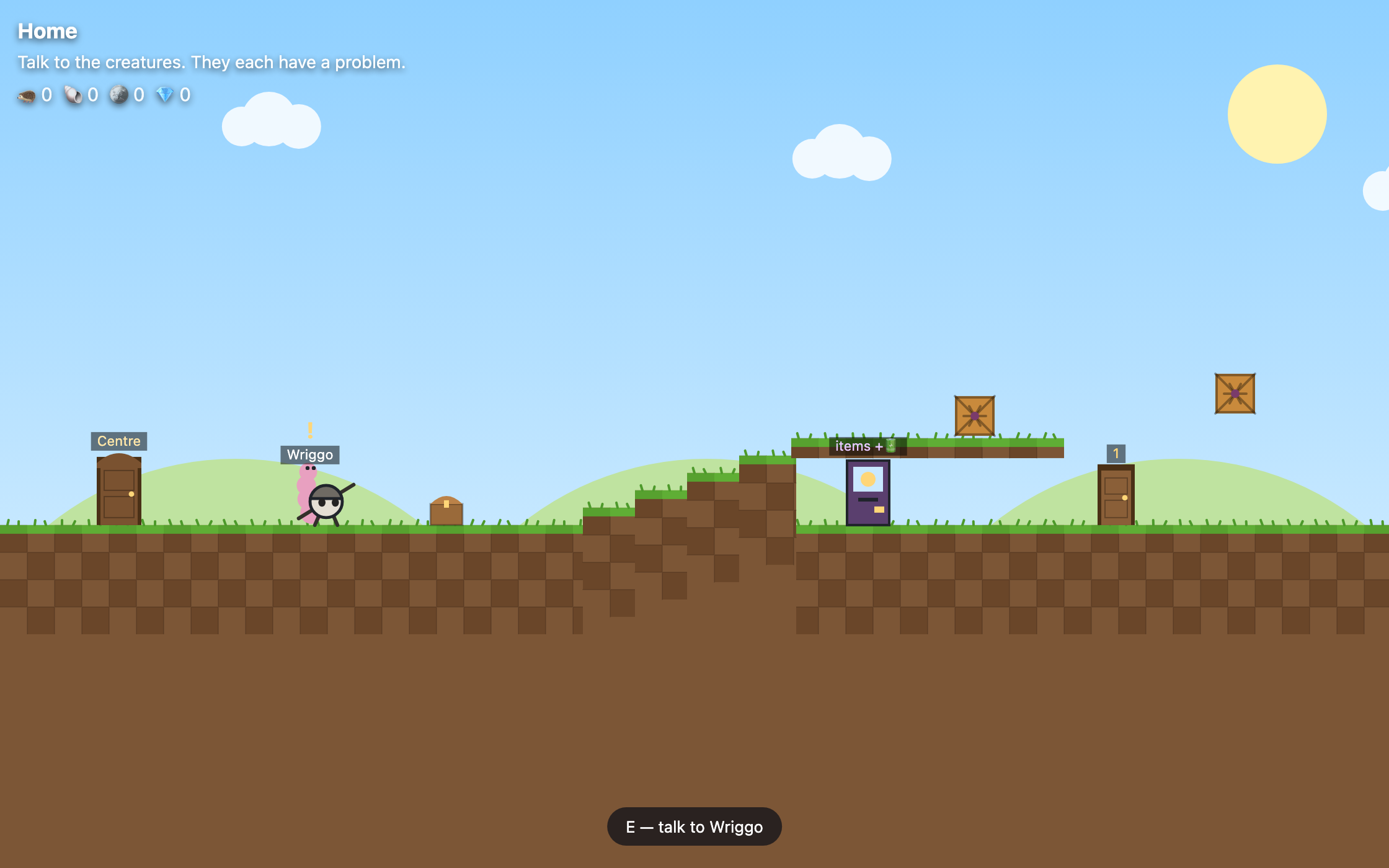
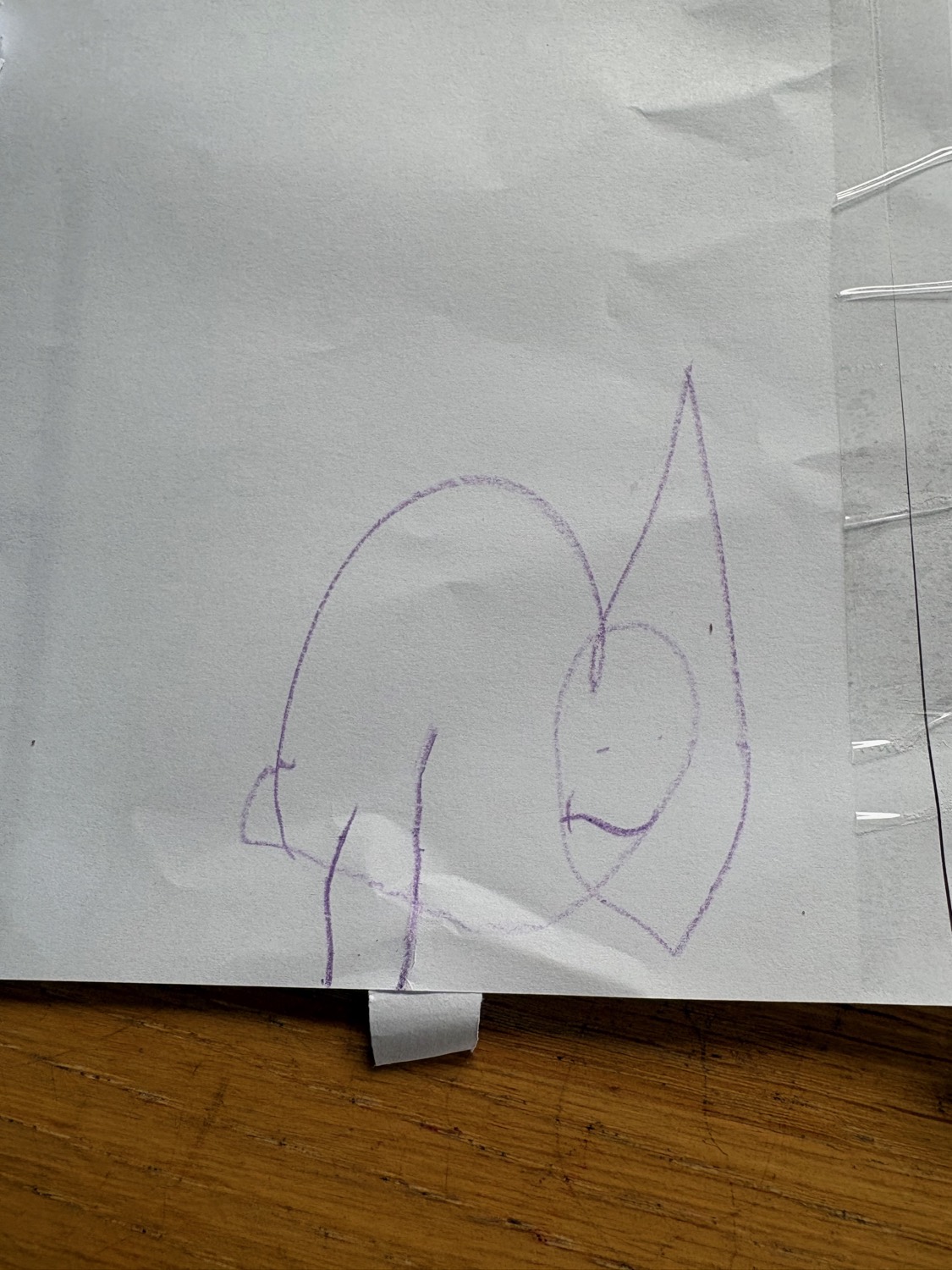
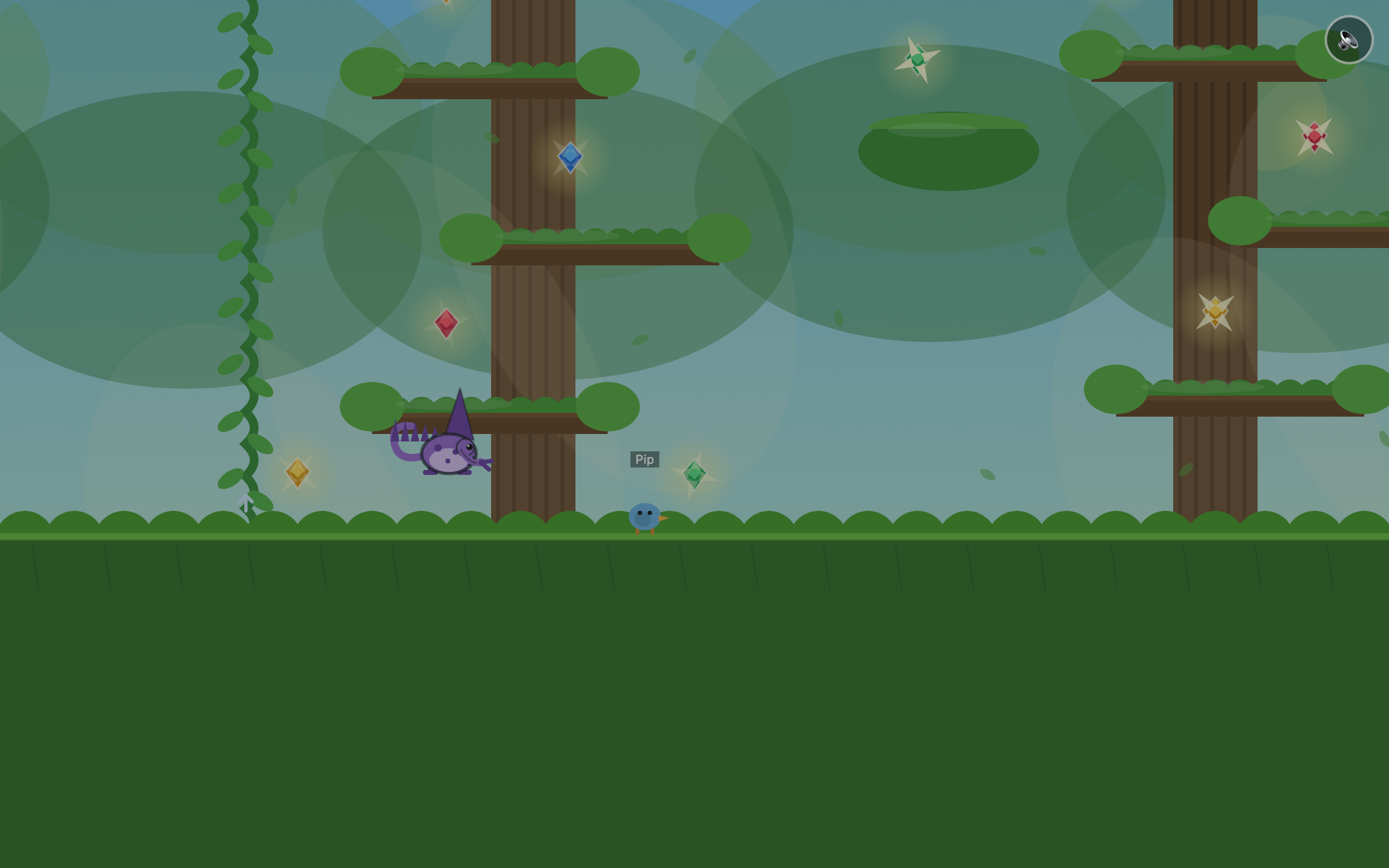
My other son, S, watched this happen once and produced his own drawing: a purple horned chameleon, one arm out. The brief: catches gems with a long arm, not a tongue, and they’re all shiny yellow, even the blue one. Larbargus now exists, has eleven levels, and as of last week has a soundtrack, because the note that day was “add sound.”
Andrej Karpathy called this “vibe coding” - give in to the vibes, forget the code exists. With a kid it’s more like vibe directing: they never see the code, they just have opinions, and the opinions are load-bearing. Simon Willison’s writing on AI-assisted programming is the practical companion piece, and Ethan Mollick has the “is this good for us” angle covered. The honest reference is the growing pile of think-pieces about whether any of this rots kids’ brains. Jury’s out. They can’t read yet, so no syntax is going in. What is going in: if you can describe a thing precisely enough, someone will build it, and then you get to be mean about the result. That’s most of software.
The pros
- Turnaround is minutes, so a small child’s attention span is no longer the bottleneck.
- No setup. One file. It runs by double-clicking, which means it also runs on Grandma’s laptop.
- They learn to give feedback that isn’t “make it better” - partly because “make it better” gets a shrug out of the model too.
- It is genuinely theirs. A tells people he made a game. He did. He also can’t tell you what a function is, and that’s fine.
- Cheapest way I’ve found to spend an hour with my kids that ends in a URL.
The cons
- They now believe all software takes about ninety seconds.
- Scope is whatever they last thought of. “Add two more worlds. And a shop. And a secret beach.” Every session.
- You are the translation layer and the rate limiter, so it is not exactly hands-off parenting.
- Zero syntax gets learned. If the goal is “teach my kid to code,” this is not that. It is closer to teaching them to be a demanding client.
- The bug reports are relentless and, worse, usually correct.
Coco is live. Larbargus is one git init away and will land at the same place with a different subdomain. The QA team is available for hire. Rates negotiable; will accept payment in stickers.